Cryptmaster by Paul Hart and Lee Williams
Year: 2024
Platforms: Lots! Played via Steam (on Steamdeck – don’t forget a keyboard though)
Usual price: £20.99 (Steam) but possibly on offer at Epic and GOG
Saves: Manually, and at altars. Death resets to last save.
Skulls. You can’t but help be fascinated by them. Such natural objects, and the item se have that remains attached to our own sense of perception. And yet so taboo, so invisible – to see one is to be reminded that we will all eventually be nothing but bones.
So when fresh life gets breathed into old skeletons, we tend to be innately intrigued. The black/white simplicity of life and death is thrown into confusion. Should we be fearful, or hopeful?
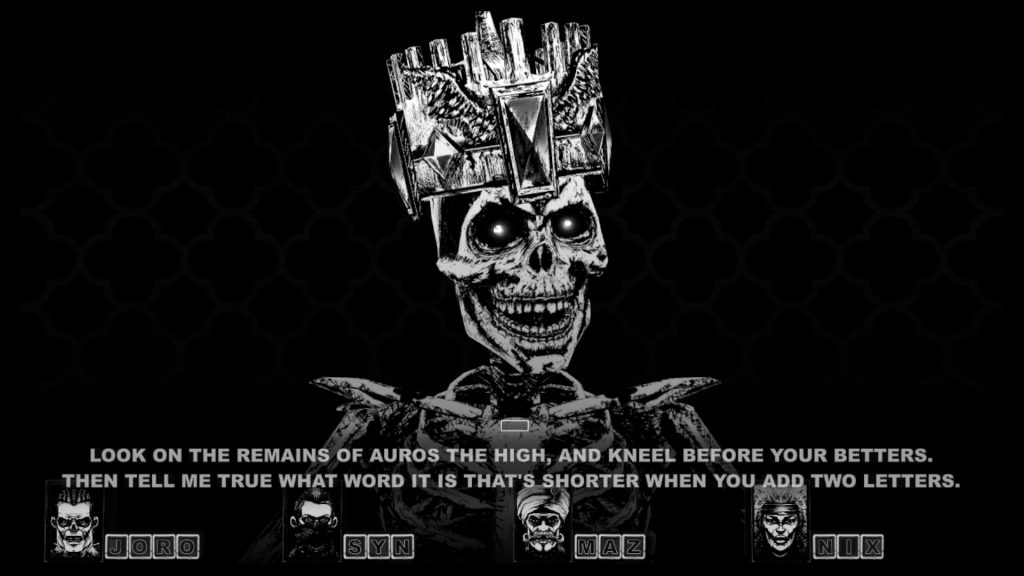
Cryptmaster toys with our basic human dichotomies like this in a delightful way. Apart from the old tale of death itself rising up against life, this is a game that keeps you off balance by uniting silliness with solemnity, and 2D art with a 3D world. Starting from the lowest layers of the dungeony depths, you rise up gradually (in terms of height, as well as stature), only to simultaneously gain greater understanding of the game itself.
What is this game then? Starting out, it might be described as a typing-based, dungeon exploring, word-led RPG. Something in between Typing of the Dead, Eye of the Beholder, and a text adventure. Taking on the roles of a band of four undead warriors, the core loop involves investigating each level, fighting enemies using actual typed words to attack and defend, and carrying out small tasks to progress. Kind of straightforward.
The game’s love of language quickly shows through, though. Most actions require (whats) to use, which can be gained by defeating enemies, finding bugs and fish, and various other jollies. Actions and memories for each character are unlocked by gaining letters and guessing words. Potions require letters as ingredients, while bonus riddles and puzzles lurk around every corner.
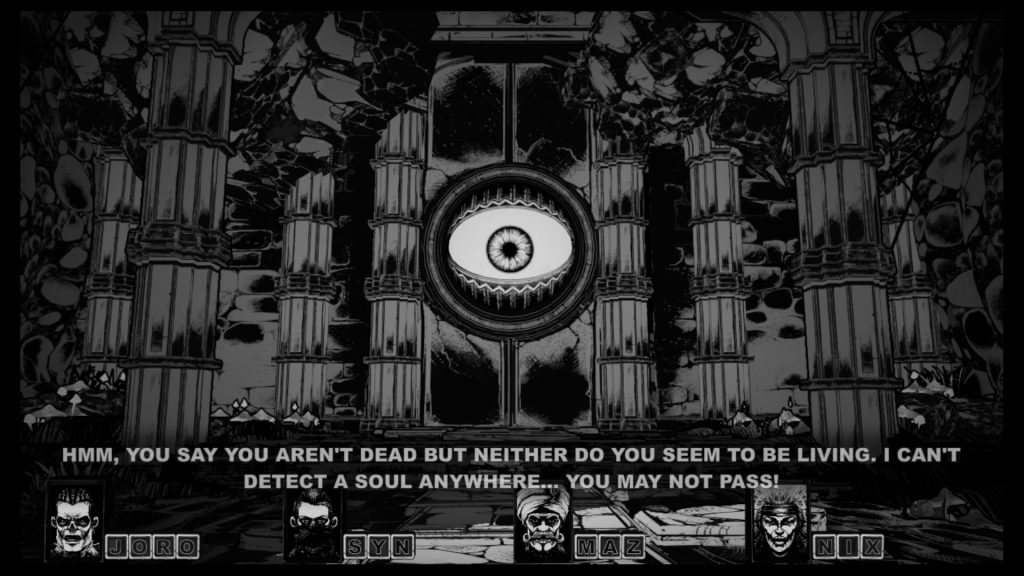
So it was always going to appeal to me, as a lover of dictionaries, crosswords and word games generally. But from there, three things set Cryptmaster apart for me.
One is the art style, of course. Both crisp and sketchy at the same time, it’s always a joy to wander round the dark nether regions to encounter the strangely wonderful inhabitants that reign over each stage. An attention to sound design dovetails perfectly, to give everything a modern, old school feel.
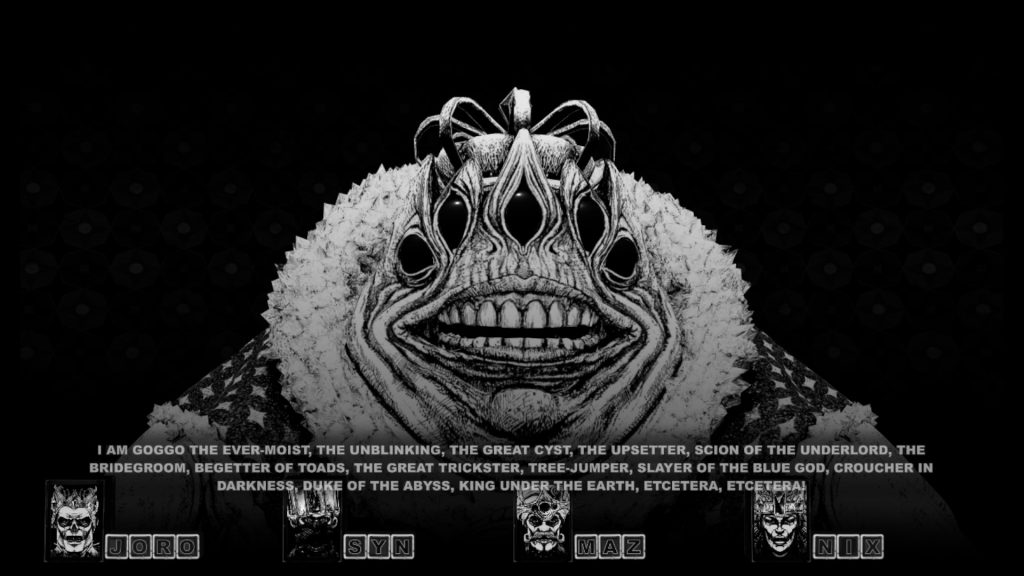
Second is the writing and the characterisation, which is kind of the glue for the whole game. A range of amusing accents spill out their lines in a way that I couldn’t skip and had to listen to. Half of the world-building is just in this plethora of delivery, and the cheekiness of it all invites you to be cheeky in return, when the right prompts appear.
Third is the subgame, Whatever. I mean, it’s called “Whatever”. Apparently thrown in as a semi-after-thought by the developers, this was expanded out in later releases (but before I arrived). The basic rules are simple: select two from your Scrabble-like row of random letters, do damage according to how many times they appear on the character cards in front of you, and trigger side effects if you fill in all the letters on a card. There’s enough synchronicity to make deckbuilding interesting enough, but you’re still largely dependent on luck in the heat of the moment. But it’s fast, and always compelling to try one more go if your luck is bad. I probably spent at least a third of my playtime trying to beat the Whatever challenges if I’m honest.
I spent a lot of time with Cryptmaster (for me, at least) and enjoyed it all. There are some pretty obscure puzzles in there for the dedicated that I’m aiming to go back too as well. I just need to make sure I don’t get distracted by those damn Whatever cards on the way.
Leave a Reply