May was a long month. (June was twice as long, this post is nearly stale.)
5pm, Friday. A co-working space somewhere in the streets of Brighton. Video calls come to an end, coffee cups are hastily thrown into the dishwasher,, and an invisible bell rings inside a few people’s heads, signalling it’s time for work to finish. And for the real effort to start.
One hour later, and the room has been through an unlikely transformation. Desks are pulled into pieces and neatly stacked, dozens of wheely office chairs are piled on top of each other, head-to-toe like an army of ouroboroses. And where there was once a forest of monitors there now sits nothing but Art, with a capital A.
Welcome to the Skiff after hours. Welcome to The Imposter Club.
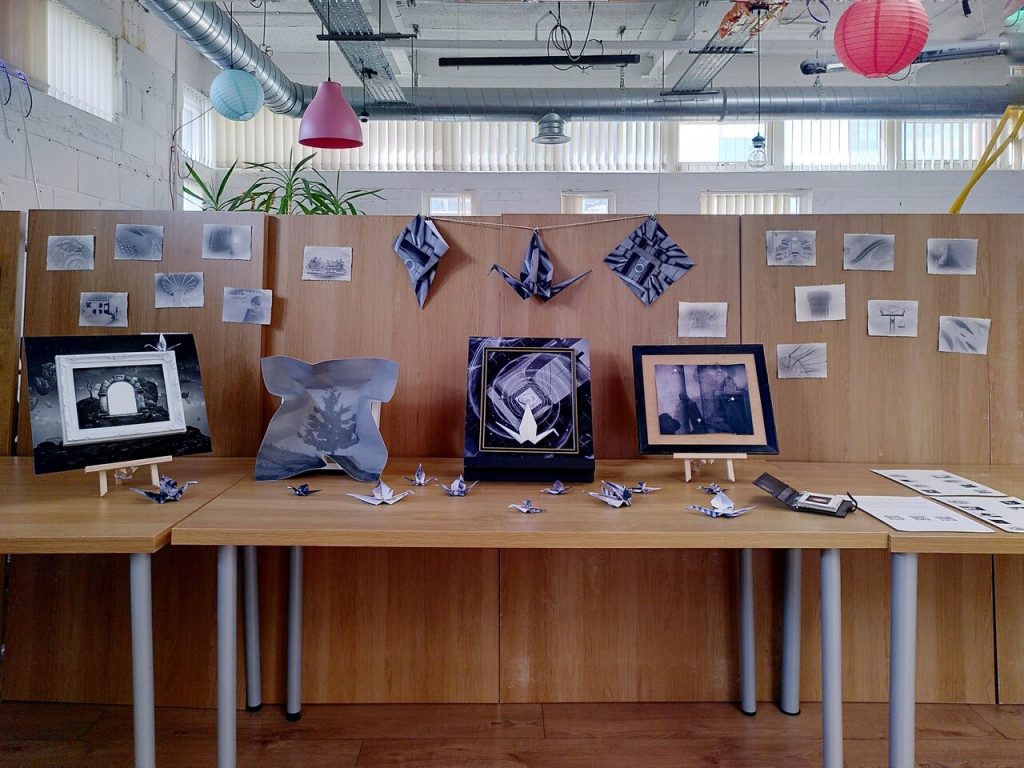
I nearly didn’t sign up for Imposter Club. I knew it’d be disruptive against the foreground of life; parenting is an ongoing battle between routine and chaos, and throwing extra emotio-organisational responsibilities in can be a dangerous affair; life-altering even. Initially I definitely said no. For at least an hour.
Because art, after all, is disruptive. It functions as a threat and an opportunity, a challenge to do something different, a punctum within a punctum. Funding for arts gets cut as a way to cut out rebellion. Without art, only the status quo remains. We create nothing but mirrors.
So yeah, go on then, I was in.
When curating – assembling, collecting, instigating – a project, one cannot get away from the pure act of storytelling. Any form of coagulation into a public space comes with the instant, inherent baggage of asking why – why are you here? Why should anyone care?
Now that the desks and chairs have gone back in place for the final time, this is the question I’m left with. Why did I do it? So what?, as my Uni supervisor would hammer home to us. Did any of it matter, or was it all just a dream? (Which, ironically, would matter even more.)
Because.
1). One, it was me, doing something. That has always mattered, and it matters even more when making something is so easy these days. It matters more when parenting and clients and housework and neverending content all conspire to take your own life away from you. I’m still here.
2). Two, being open with your work is a form of connection and of establishing a touchstone with the world. My own small project was the fuel for conversations – even if my own thoughts on the project remained largely private (or on a mildly-skimmed print-out), the conversations were real. People came and we talked, each visitor bringing something different and yet intrinsically personal to the space. And from experience, it is so easy to disappear into the background, without those connections. “Social capital”, yet nothing so formal. A concrete affirmation and simultaneously an abstract possibility of existence, just to talk to people.
3). Three, the physical world must be reaffirmed as much as the social world. I wanted the things I made to reflect the space they were in, as something non-ephemeral. In an age where screens flash images for a few seconds and playing fields and pubs are removed every day, an item of unique and previously-unseen qualities has a renewed sense of magic to it.
We have become used to rarity as a commodity. In a world of mass production and customisation, deliberate scarcity is everywhere. One cannot move for limited editions. As I’ve said to the kids too many times to count, “everything is rare, so there will always be something rare to interest you.” It’s become a conveyor belt.
But the chance to make something of your own still hiolds a special place – like handmade toys and the cooking of your childhood memories, there is an art to creating something that is entirely dislocated from momentary value, and entirely invested with tactile and emotional value instead.
(not that I’m saying that my pieces were invested with this, of course. But it is also impossible to say whether they were, as this is the domain of subjectivity, where one person may remember that one picture in 20 years time and even then only inaccurately but hey there was something different, uncanny, fascinating about it that meant it didn’t just get instantly processed out of the brain’s neurons but stuck around to ask questions still)
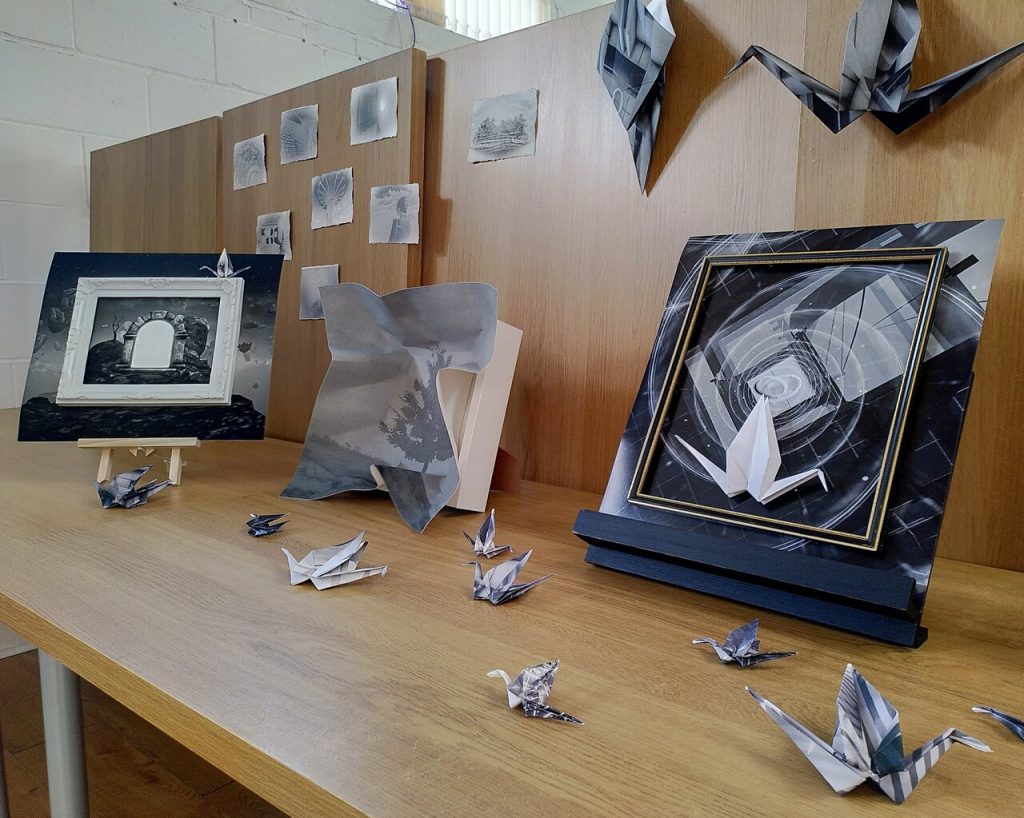
So does this mean I should, or even can, ask the question of “So what?” about my open house experience? Should it be left as an exercise to time and percolation? Do I need to answer that question, whether for myself or others?
Perhaps not. It’s not like I’m short of creative ideas in the backlog. But I do know that it has led to more hunger for being an active part of the world, not just a passive observer. The practice of a constructive role, which seems so at-odds with the prevailing narrative. A chance to make the world interesting again.
And more cranes. Definitely more cranes.
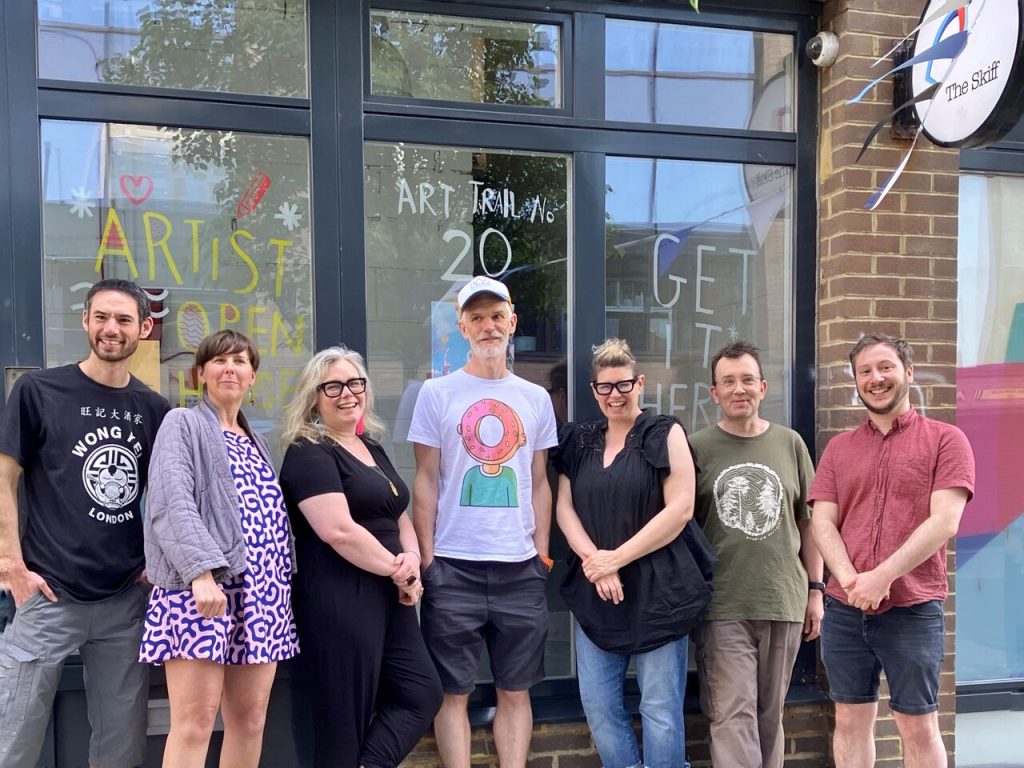
You can follow The Imposter Club on Instagram at @imposterclub.btn, or myself at @exmosis.
Leave a Reply